Dissertation study 3 · Decision intelligence
Weed morphology–guided spray decisions
Detecting a weed answers where to spray; this study addresses how to spray it by adapting delivery decisions to weed size and growth habit.
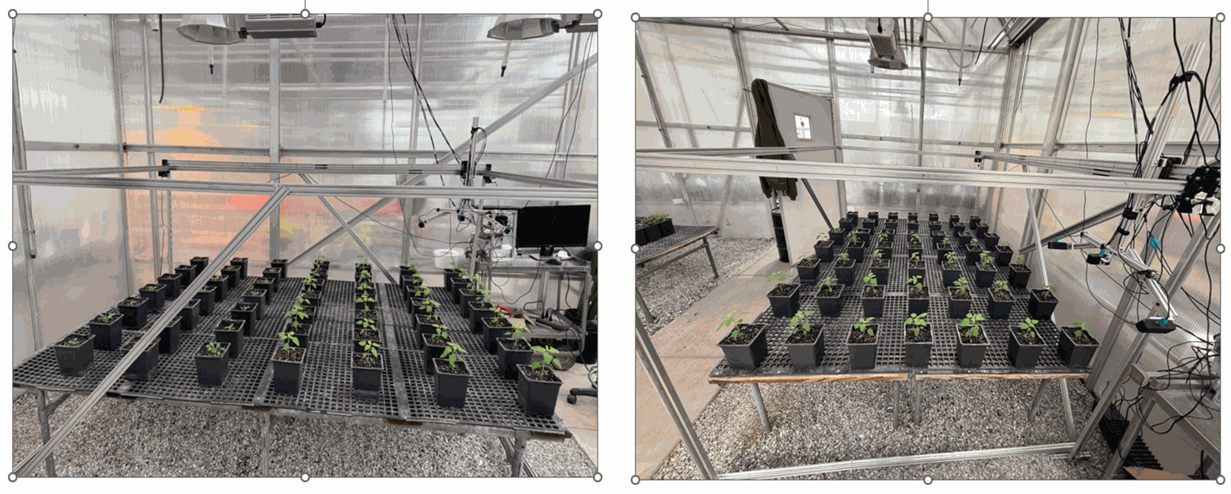
SpeciesMarestail · lambsquarters
ImagingTop + side stereo views
TreatmentsTip · angle · speed · size
ResponseCanopy + ground deposition
Research challenge
A binary spray/no-spray decision ignores plant size, architecture, and the amount of spray required for effective coverage.
Engineering approach
- 01Capture repeatable multiview plant imagery with a dual-axis gantry.
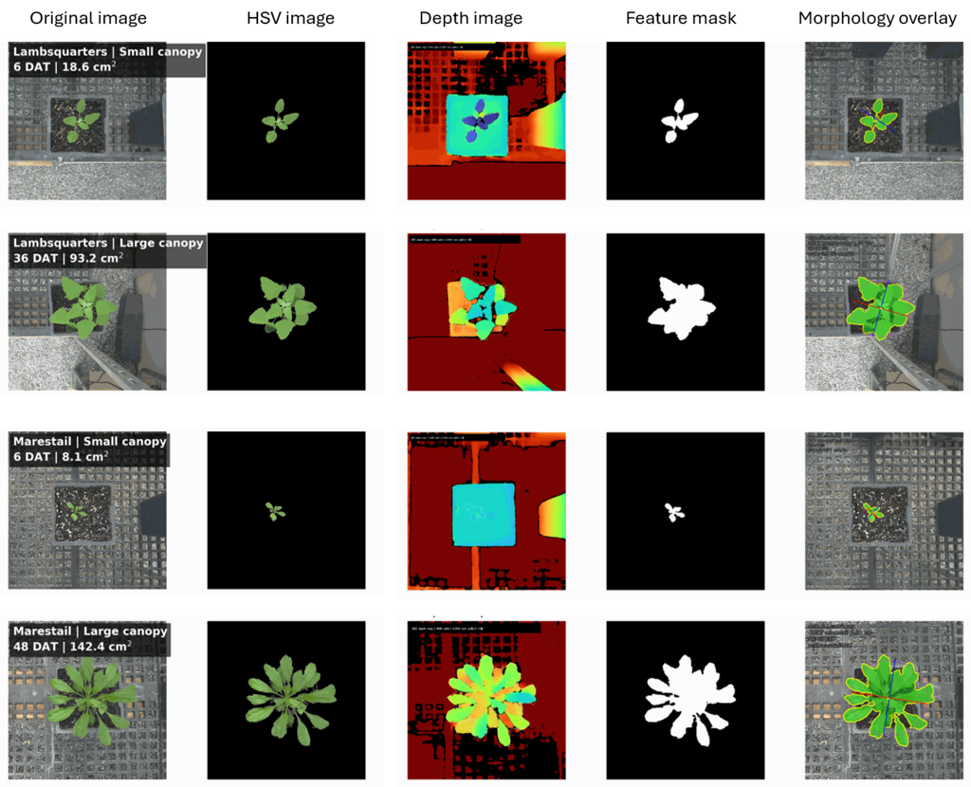
- 02Extract projected area, shape descriptors, and growth-habit features.
- 03Classify plant size and architecture for treatment selection.
- 04Evaluate size-linked spray volume, nozzle angle, travel speed, and deposition.
Experimental design
Systems in action
Weed morphology and adaptive dosing
These demonstrations show the complete greenhouse workflow: controlled image acquisition, morphology extraction, and the software environment used to turn plant measurements into size-aware spray decisions.
Plant pixels are separated from the background to quantify projected area and morphology features used in weed-size and growth-habit characterization.
The automated gantry moves across the plant array to support repeatable top- and side-view imaging throughout plant development.
The custom GUI coordinates three camera views, region-of-interest settings, image capture, calibration, and repeatable greenhouse data collection.
Why it matters